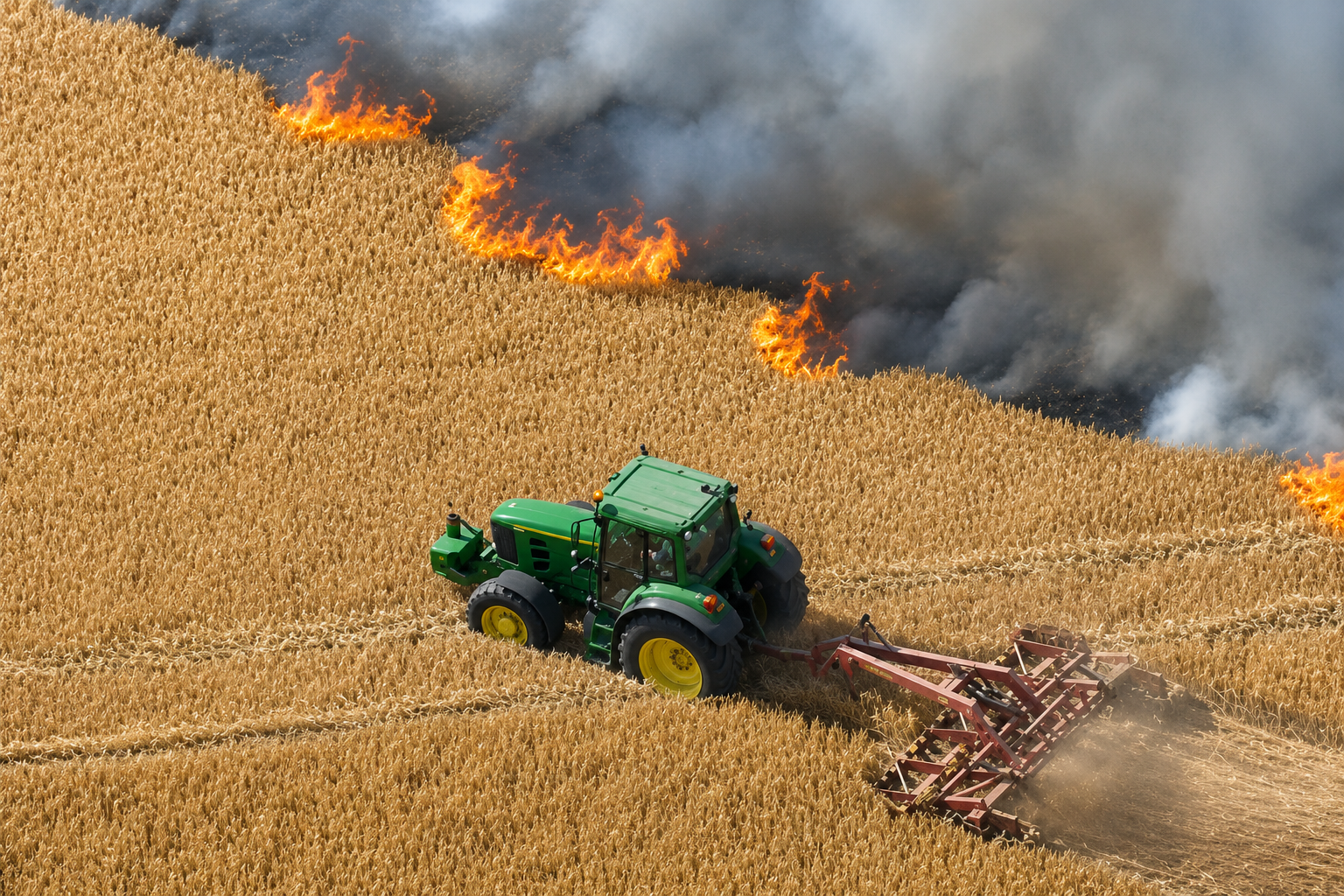
Bale Out: The Social Media Trend Targeting Farm Hay Stacks This Summer
If you’d told anyone a few years ago that the biggest new threat to your straw stack would come from a phone app, they’d have laughed you out of the yard. But here we are. Humberside Police are currently investigating six suspected deliberate bale fires across North Lincolnshire from a single night at the end of July, and West Mercia Police has asked farming organisations to pass on a warning after a spate of overnight haystack fires elsewhere, all pointing to the same source: a social media challenge apparently encouraging people to set fire to as much as possible and film it.
It’s the kind of thing that’s easy to dismiss as background noise until it happens on your own farm, at the worst possible moment. This summer’s heat and drought mean straw and hay are drier and more flammable than usual, and after a genuinely tough harvest, plenty of farms don’t have feed to spare if a stack goes up. It’s not scaremongering to say the timing could hardly be worse. It’s just true.
1. What’s Actually Worth Doing About It
None of this means turning the farm into a fortress, and nobody’s expecting you to sit up all night watching a field. The advice from the police forces dealing with these incidents is refreshingly practical: if you’ve got cameras, it’s worth a quick glance over your hay and straw stores of a morning, more as a habit than a chore. If something or someone looks out of place near your stacks, especially overnight, a quick report is far more useful before a fire starts than after. And where you can, keeping stacks a little further from public roads and footpaths, or simply moving them promptly once baled, takes away a lot of the opportunity.
2. The Bit That’s Actually Quite Heartening
Here’s the context that doesn’t always make the news. When fire tore through the New Forest a few days back, – unrelated to this Tik Tok campaign – it was farmers, not just the fire service, who turned up with water bowsers, diggers and trailers to cut firebreaks and shift water, most of them mobilised through nothing more official than a WhatsApp group. Nobody asked them to. They just did it, because that’s what happens when one farm’s problem becomes everyone’s problem.
That’s really the best defence against a trend like this: the same instinct that gets a bowser to a wildfire also gets a neighbour to notice a strange car parked by your gate at two in the morning. Reporting it isn’t being paranoid, it’s just being part of that same network. A five-minute text to the local social media group is a small price for keeping the whole community’s winter feed intact. It’s worth a two-minute conversation with neighbours too, agreeing who keeps an eye on what overnight is often simpler than spending loads on individual farm defences.