Follow the Meat: The Real-Life Whodunnit Playing Out in Britain’s Farm Shops
Picture a plain, unremarkable unit on an industrial estate in Dudley. No farm gate, no bunting, nothing to suggest it has anything to do with agriculture at all. Except, when West Midlands Police, HMRC and the Food Standards Agency’s National Food Crime Unit turned up there recently, they found something else entirely: roughly 4.25 tonnes of illegal meat, a cutting operation running with no proper paperwork trail, and four men now under criminal investigation. It reads like the plot of a decent detective drama. Unfortunately, it’s happening for real, and more often than most of us would like.
This wasn’t a one-off. The National Food Crime Unit has reported seizing more than 33 tonnes of suspected illegal food products nationally in the past few weeks alone. And some of it never went near a proper abattoir at all, a growing share can be traced straight back to animals taken off the land.
1. It Starts with What Goes Missing from the Field
This is the bit that should matter most to livestock farmers specifically, not just anyone running a shop. NFU Mutual’s latest rural crime figures show that the cost of claims they paid out (just this one specialist insurer) on livestock theft up by almost 30% year on year, to around £4.5 million, with organised criminals continuing to target flocks and herds alongside machinery. Every one of those animals has to go somewhere, and a fair number end up feeding exactly the kind of unofficial cutting operation that turned up in Dudley.
Which is why speed matters more than almost anything else here. The NFU’s advice is refreshingly simple: 999 if it’s happening now, 101 if you’ve just discovered it, because a crime reference number matters for insurance too, and every hour that passes makes stolen stock harder to trace and easier to move on. Keeping ear tag numbers, breed and markings up to date means you can put a proper description out fast, on social media as well as to police, and a quick word to neighbours about reporting unfamiliar vehicles or trailers loading stock costs nothing. Some flocks now carry microdot marking as an extra layer, and simply signing your boundary to say so is often deterrent enough on its own. None of this guarantees anything, but reporting early genuinely gives you and the police a fighting chance, rather than a cold trail.
2. What’s Actually Going On
Another thing that should interest every farmer, not just worry them: a good chunk of this trade piggybacks on the same routes that honest diversification created. As more farms have opened shops, started meat box schemes, or sold direct to local restaurants, a small number of opportunists have quietly built a copycat version of that same supply chain, minus the welfare standards, the tax, and the paperwork. It’s not that farm shops are the problem. It’s that criminals have borrowed the disguise.
3. If You’re Hosting a Car Boot Sale, Show or Farmers’ Market
Here’s one that’s genuinely easy to fix, and entirely within your gift if you’re the one running the gate at the local community event. If someone wants a meat stall, pitch, raffle table or freezer van at your event, a simple “where’s this from, and can you show me?” before they set up is better than any amount of after-the-fact worrying. Food businesses are already supposed to know one step back in their own supply chain, so it’s not an unreasonable ask, it’s really just holding people to what should be happening anyway. Nobody would think twice about turning away a trestle table of obviously counterfeit DVDs. Untraceable meat deserves exactly the same welcome.
4. The Same Goes for the Pub Raffle and the Chap with a Chest Freezer
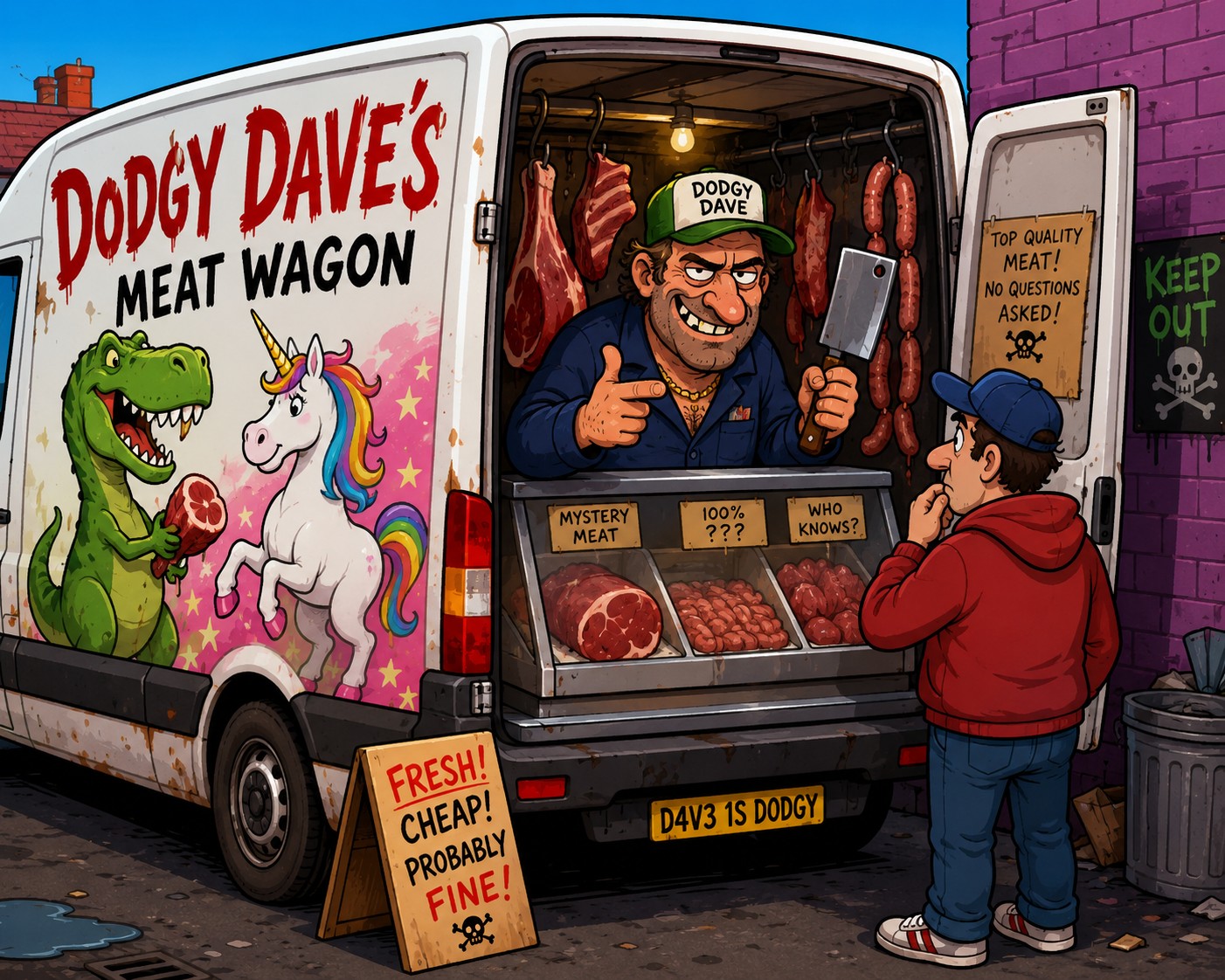
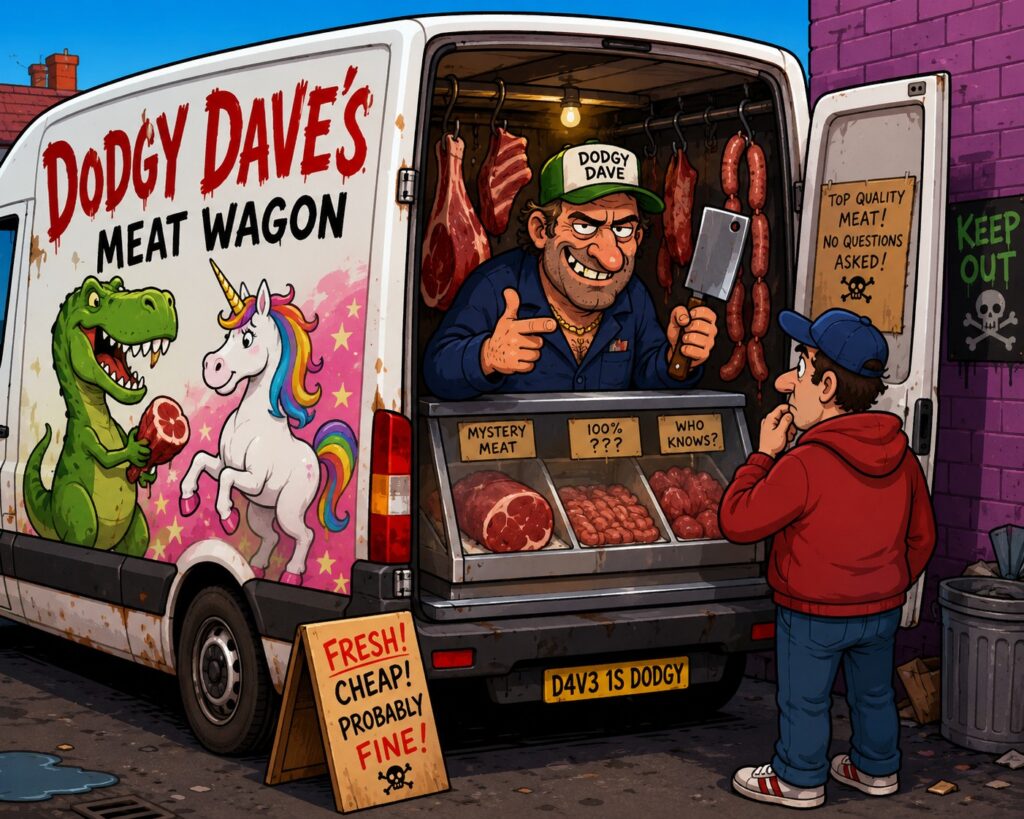
It’s worth having the same quiet word in other settings too. Pubs, clubs, and mobile traders selling meat door to door or out of a freezer in a van are all part of the same chain, and a raffle prize or a “mate’s rate” joint of lamb is no different from a market stall in that sense. A two-second question about where it came from, asked kindly rather than accusingly, closes off a market that relies on nobody ever asking.
5. Cheap Meat Deserves the Same Side-Eye as a Knock-Off Bottle of Vodka
Most of us have long since learned to be wary of a “bargain” carton of cigarettes or a bottle of spirits without a duty stamp on it at a car boot sale. The same instinct applies to tools and machinery: quad bike theft and agricultural vehicle theft are up this year, yet GPS unit theft has fallen, largely because forensic DNA marking schemes for smaller technical equipment made stolen kit too hot to sell on. When something gets harder to fence, criminals simply move on to easier targets. Cheap meat with no story behind it deserves that exact same reputation, not a bargain, but a red flag.
6. It’s Going on Somebody’s Plate
It’s worth remembering why any of this matters beyond the principle of the thing. This meat doesn’t stay in a lock-up, it gets cooked and eaten, by families, at barbecues and finds its way into school packed lunches. None of it has passed through the inspections, temperature controls or disease checks that keep meat safe, which means the real risk isn’t abstract, it’s food poisoning, or worse, for the sake of saving a few pence on a joint. Every honest farmer would far rather you asked the awkward question than contribute to the death of a small child.
7. Worth Knowing
It’s a two-way street, too: the more visibly traceable your own meat is, tags, records, a receipt with your farm’s name on it, the easier it is for a customer to trust you over the unmarked van on the village green. Rising demand around religious festivals and cost pressure on households are both pushing more buyers toward cheaper, unverified meat, which makes this less a farming crime story and more a consumer trust story that happens to start on a farm. Honest, properly traceable British meat is a better story than ever, and one worth being genuinely proud of.