A response to Harper Adams University Rural Criminology Policy Note #1 entitled:
Factors Affecting Rural Community Confidence in the Police
Dr. Kreseda Smith, a leading rural criminologist at Harper Adams University, offers valuable insights in this inaugural Rural Criminology Policy Note entitled: Factors Affecting Rural Community Confidence in the Police. This academic study was centred on the West Mercia Police force area.
This is a response from the Programme Director at Rural SafeGuard, a commercially available crime reduction initiative that focussed on rural communities and forms part of the adversarial risk management services offered by the Optimal Risk Group.
The conversations that Rural SafeGuard have with farmers during agricultural events and county shows reveal that the views reported by Dr Kreseda are broadly shared across England and Wales.
Rural SafeGuard believe that most folk in the countryside recognise that dedicated rural community police officers are passionate and committed to making rural communities safer. Yet they often encounter challenges such as limited resources, frequent reassignment to higher priority tasks, and difficulty matching the speed and coordination of organised rural crime groups.
Nomadic organised crime groups take advantage of weaknesses in the UK policing system. In this paper, Kreseda, after speaking with farmers and rural residents, highlights the need for standardised criminal incident reporting, improved training for neighbourhood police to identify and gather evidence on agricultural crime, and better responses to issues like hare-coursing, fly tipping, and machinery theft, which disproportionately affect rural areas.
Despite repeated calls for increased funding for rural police forces, such support rarely materialises. Is it the case that society often expects too much from limited police resources, asking them to tackle a wide range of issues—from violence against women and children, retail theft, anti-social behaviour, knife crime, and terrorism. More recent crime types, including those perpetrated online and in the digital space, together with the increased policing of ideology-based protest and public safety around sporting and community events. As demands grow, police capacity is increasingly stretched, making it impossible for them to meet every expectation. The police just cannot deliver all things to all people.
Should rural policing adopt strategies common in urban areas? Where commercial security supports public policing and helps local authorities meet their responsibility to provide safe environments for people to live, work, rest, and play?
Many towns and cities establish Business Improvement Districts (BIDs), which involve licensed private security providers patrolling public spaces and responding to incidents before uniformed police officers arrive. These arrangements facilitate integrated teams of police and private security personnel, ensuring capable guardians are present to protect individuals and property susceptible to unlawful activities.
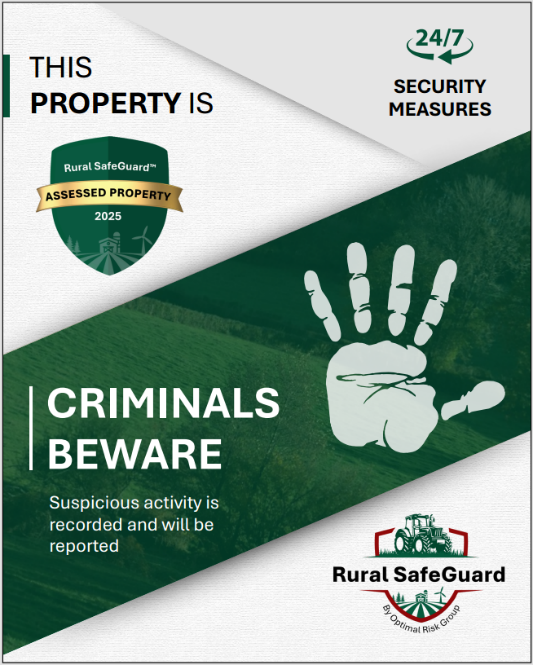
This approved and organised public safety capability may go some way to filling the perceived gap that may otherwise be addressed through vigilantes taking matters into their own hands. Numerous farmers, rural-based membership bodies, and agricultural sector lobby-groups have all recently cautioned against a foreseeable outcome whereby a farmer or perpetrator dies unnecessarily due to a criminal activity within our rural communities.
A key issue shared by acquisitive crimes in cities and rural communities is the absence of effective deterrents. As highlighted to Dr Kreseda, there are problems such as police not arriving quickly enough to catch offenders and insufficient resources to gather evidence needed for convictions or punishments that would discourage future criminal activity. Organised crime groups and some local youths seem unconvinced that current policing or the judiciary deter crime.
As a result, rural communities need to strengthen security around farms to reduce criminal activity. Serious criminals, while organised, often target places that are easier and less effort for them.
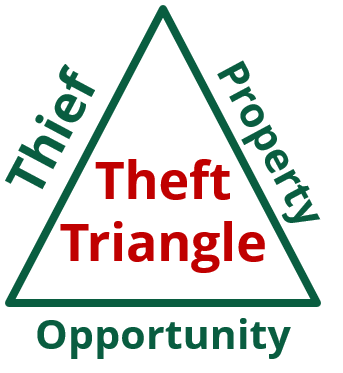
Theft requires a thief, a target (property), and an opportunity – this is known as the ‘theft-triangle’. Farmers and land managers can reduce theft by routinely adopting resilient practices, like making property difficult to access and using barriers to reduce unauthorised vehicles from entering the yard. These simple measures lower the risk of theft and minimise post-incident workload for victims and police.
Rural SafeGuard focus on promoting affordable crime reduction solution, raising awareness of foreseeable crime risk, and reducing complacency. Unlike other UK sectors that hire security advisors or consultants, agriculture often relies on police to provide safety for homes, workplaces, livestock, and equipment.
It’s uncommon for a neighbourhood police officer to patrol a Tesco superstore or its car park to protect stock on the shelves or vehicles in the park. So why do farmers expect police officers in remote rural areas to safeguard livestock in the field or a tractor in the barn?